
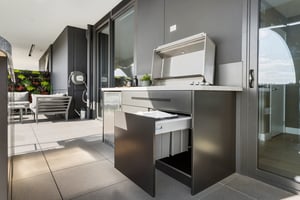
Australian summers bring long days, sizzling barbecues, and the kind of outdoor entertaining that makes your backyard the heart of your home. But those same conditions; intense UV, coastal salt air, sudden storms, and soaring temperatures, can quietly damage outdoor kitchen components if they're not built to handle them. LimeTree Alfresco designs and builds outdoor kitchens specifically for Australian conditions, using climate-resistant materials that stand up to the elements year after year.
This guide walks you through the main causes of outdoor kitchen deterioration in Australia and what you can do to prevent them. You'll find practical advice on material selection, installation quality, and a simple maintenance schedule to protect your investment.
Key Takeaways: Prevent Outdoor Kitchen Wear in Australian Climates
- UV radiation, salt air, and humidity are the three biggest threats to outdoor kitchen longevity across Australia.
- Choosing corrosion-resistant materials like marine-grade stainless steel and anodised aluminium prevents rust and structural damage.
- Poor installation quality accelerates deterioration - always work with specialists who follow manufacturer specifications.
- LimeTree Alfresco uses UV-stable Corian benchtops and Anodised Aluminium Frames to protect against Australian conditions.
- A regular cleaning schedule adds years to your outdoor kitchen's lifespan with minimal effort.
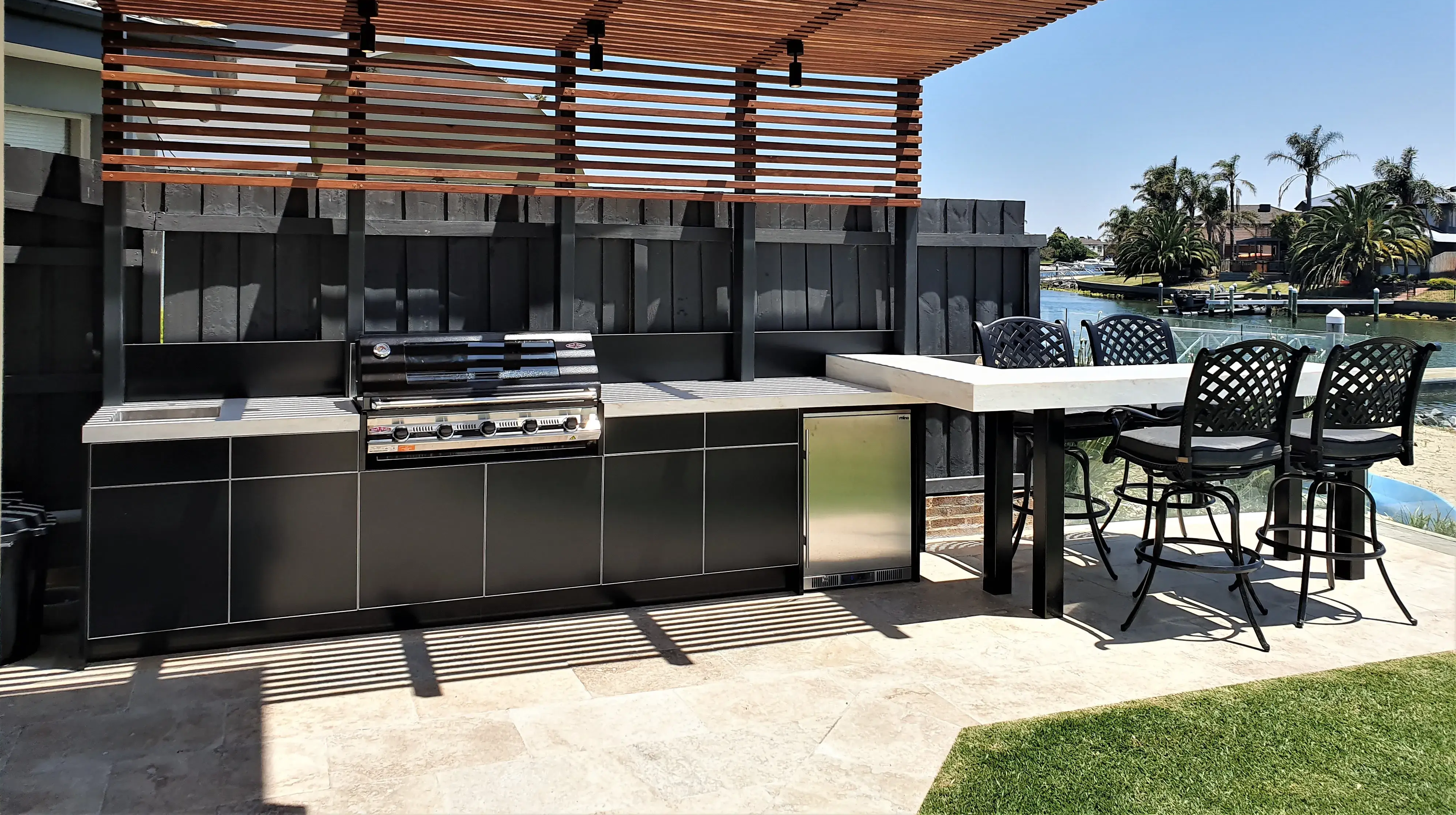
What Causes Outdoor Kitchen Deterioration in Australia?
Outdoor kitchens face a unique combination of environmental challenges in Australia. Understanding these causes helps you make better decisions about materials and maintenance.
UV radiation breaks down finishes and fades colours over time. Australia has some of the world's highest UV levels, and unprotected surfaces can show visible damage in just a few seasons.
Salt air corrodes metal components, particularly in coastal areas. The corrosive effect extends further inland than most homeowners realise, especially during strong easterly winds.
Temperature fluctuations cause materials to expand and contract repeatedly. This movement can crack benchtops, loosen joints, and create gaps where moisture enters.

How Does UV Radiation Damage Outdoor Kitchen Materials?
UV rays are relentless. They cause fading, cracking, and chalking on surfaces that aren't designed for exterior use.
Standard cabinetry finishes peel and discolour when exposed to direct sunlight. Interior-grade materials simply aren't formulated to withstand daily UV bombardment.
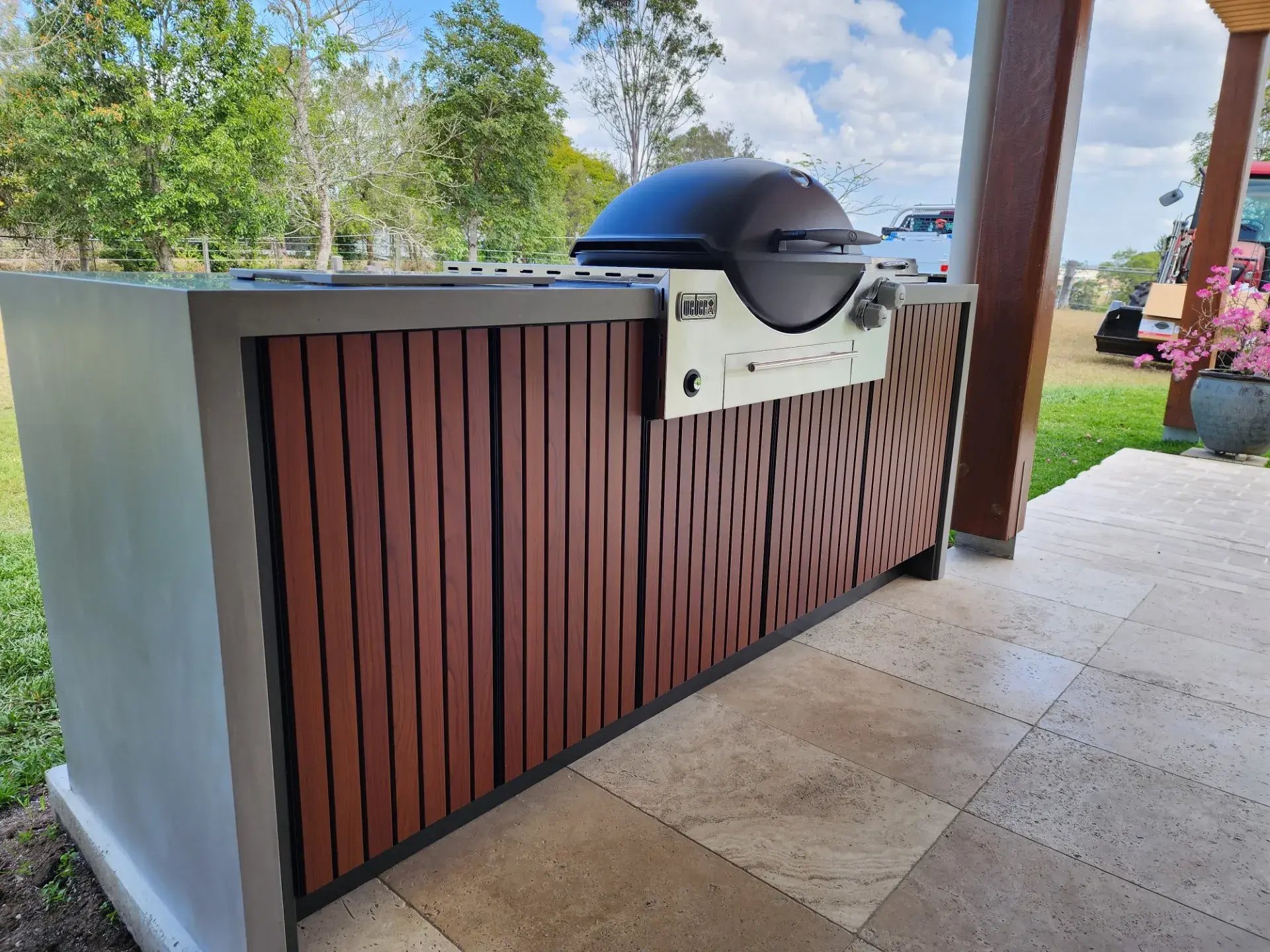
LimeTree Alfresco addresses this by using door inserts (alumninium Composite panel, Extra High Density PVC & Aluminium battens) that resist UV degradation.
Why Does Salt Air Cause Corrosion and Rust?
Salt particles settle on metal surfaces and draw moisture from the air. This creates an electrochemical reaction that accelerates corrosion, even on materials marketed as "rust-resistant."
Standard stainless steel often contains iron, which reacts with salt. The result is rust spots, pitting, and eventually structural weakness.
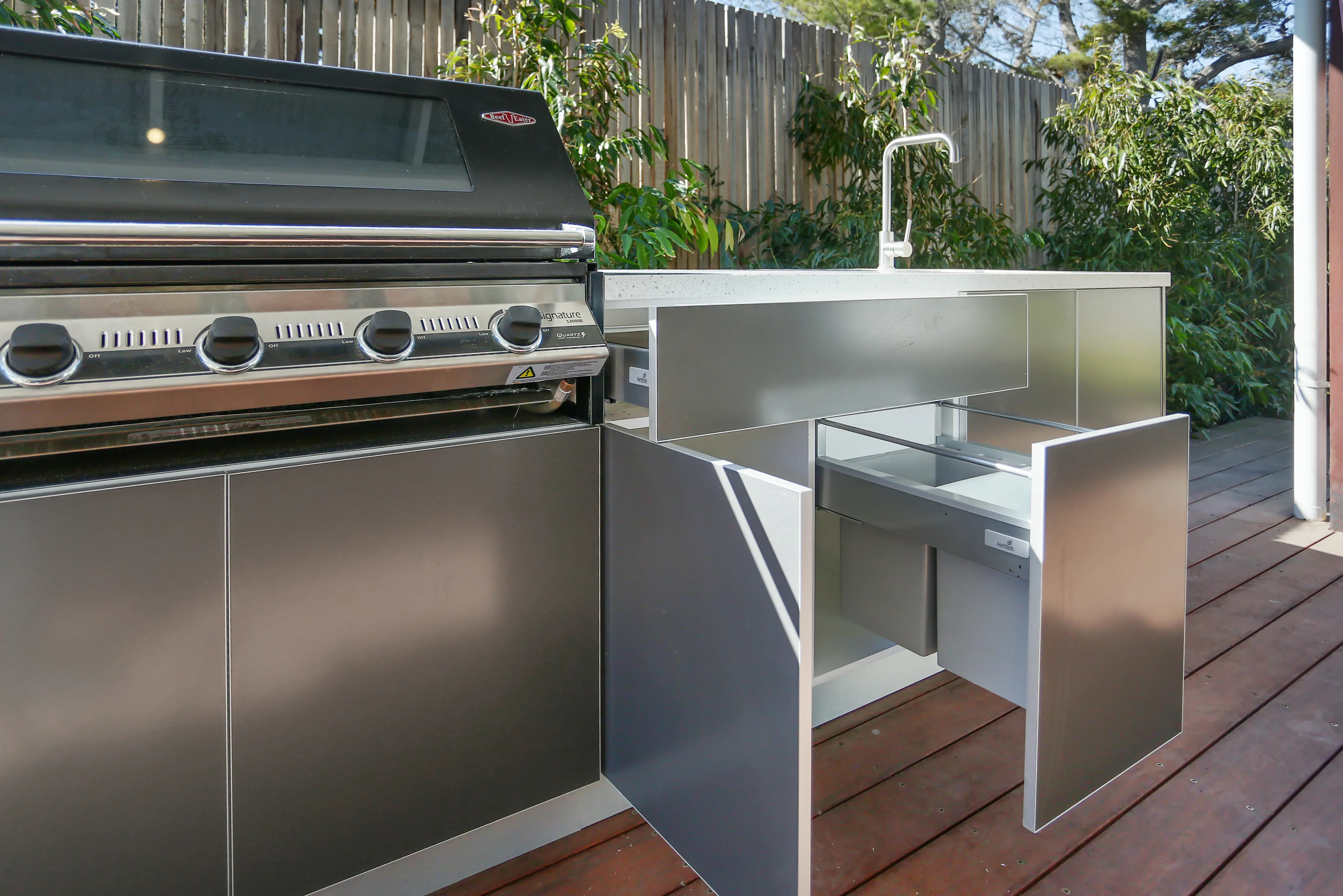
The solution lies in specifying marine-grade materials from the outset. LimeTree Alfresco uses 316 marine-grade decking screws throughout every installation, the same grade used in boats and coastal infrastructure. While 316 stainless steel is designed for demanding outdoor environments, regular cleaning and maintenance are still required to help preserve its appearance and long-term performance, particularly in coastal areas where exposure to salt and moisture is higher.
How Far Inland Does Salt Air Affect Outdoor Kitchens?
Salt air isn't only a concern for homes directly on the beachfront. Coastal winds can carry salt particles inland, where they can settle on outdoor surfaces and contribute to corrosion over time. The level of exposure depends on factors such as distance from the coast, wind patterns, and surrounding landscape.
If you live anywhere near the coast, designing for salt resistance is essential, not optional.
What Role Does Installation Quality Play in Longevity?
The best materials fail when installed incorrectly. Poor construction quality is one of the most common causes of premature outdoor kitchen wear.
Common installation issues include using unsuitable materials, poor ventilation around appliances, and using indoor-rated fasteners in outdoor applications. These issues can impact the long-term performance of an outdoor kitchen, leading to premature wear, moisture damage, and reduced durability.
Working with specialists who understand outdoor kitchen construction makes a significant difference. LimeTree Alfresco ensures every installation follows recommended guidelines and manufacturer specifications, backed by over 1,800 successfully delivered projects.
Which Materials Best Resist Australian Climate Conditions?
Material selection is your first line of defence against outdoor kitchen deterioration. Not all "outdoor-rated" products perform equally under Australian conditions.
Benchtop Materials That Handle Heat and UV
Corian stands out for Australian outdoor kitchens. This non-porous solid surface resists stains and won't fade under UV exposure. It's also easy to clean and repair if scratched.
Cabinetry That Won't Rot or Swell
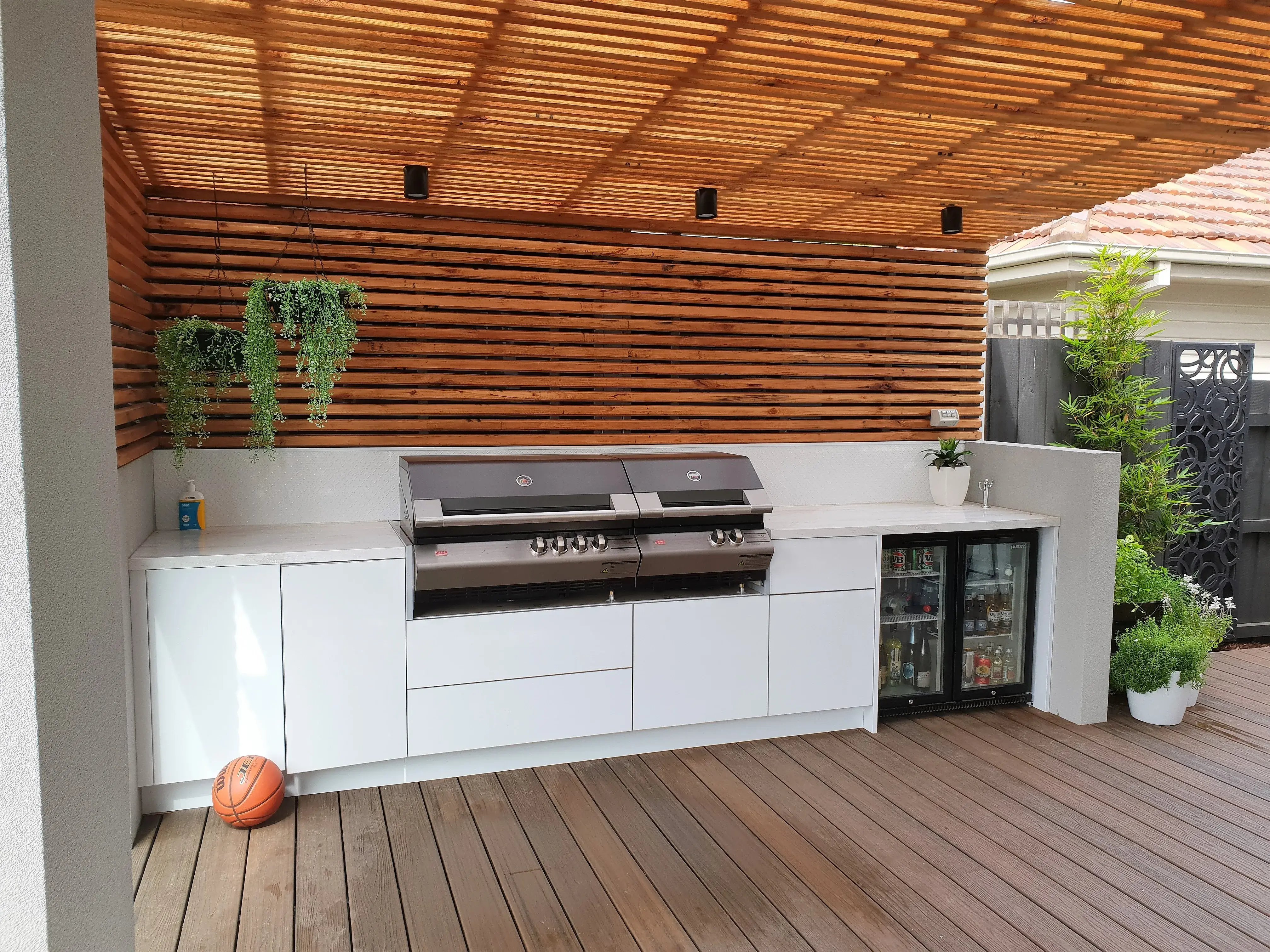
Aluminium composite panels outperform timber and standard MDF in outdoor environments. They don't absorb moisture, won't swell or rot, and resist corrosion when properly finished.
PVC-based cabinet systems also perform well. They're completely waterproof and maintain their structural integrity even after years of rain exposure.
How Does Heat Affect Outdoor Kitchen Components?
Australian summers regularly push temperatures above 35°C. Combined with radiant heat from BBQs, cabinetry and benchtops face intense thermal stress.
Excessive heat causes adhesives to fail, seals to deteriorate, and some materials to warp or delaminate. Without proper protection, damage accumulates with each use.
What Maintenance Schedule Prevents Premature Wear?
Regular maintenance dramatically extends your outdoor kitchen's lifespan. The good news: it doesn't take much time.
Monthly Cleaning Tasks
Wipe down all surfaces with mild soap and water to remove salt deposits, grease, and dirt. Pay special attention to metal fittings and hinges where corrosion often starts.
What Warranty Protection Should You Expect?
Warranty coverage indicates a manufacturer's confidence in their materials and construction. Limited or short warranties often signal corners cut somewhere in the build.
Look for warranties that specifically cover outdoor use and climate-related wear. Many standard warranties exclude UV damage and weather-related deterioration.
LimeTree Alfresco backs its outdoor kitchens with up to a 25-year written limited warranty. This coverage reflects the durability built into every component - from the anodised aluminium frames to the UV-stable Corian surfaces
.
Conclusion: How to Protect Your Outdoor Kitchen Investment
Preventing outdoor kitchen deterioration in Australian conditions comes down to three factors: choosing the right materials, ensuring quality installation, and following a simple maintenance routine.
UV-stable surfaces, marine-grade fasteners, and materials selected specifically for Australian outdoor conditions address the environmental challenges head-on. With regular cleaning, your outdoor kitchen can deliver decades of enjoyment rather than years of frustration.
LimeTree Alfresco brings over 75 years of combined experience to every project, designing outdoor kitchens built specifically for Australian conditions. If you're planning a new outdoor kitchen or upgrading an existing space, starting with climate-resistant materials saves you time, money, and disappointment down the track.
FAQs About Preventing Outdoor Kitchen Wear in Australian Climates
What's the biggest cause of outdoor kitchen deterioration?
UV radiation causes the most widespread damage to Australian outdoor kitchens. It fades colours, breaks down finishes, and weakens materials that aren't rated for exterior use. Choosing UV-stable materials from the start prevents this damage.
Do I need marine-grade materials if I don't live near the beach?
Salt air travels further inland than most people expect. If you're anywhere near the coast, marine-grade fasteners and corrosion-resistant materials significantly extend your outdoor kitchen's lifespan.
Can I leave my outdoor kitchen uncovered year-round?
Yes, if it's built with the right materials. LimeTree Alfresco outdoor kitchens use heat and water-resistant components that can remain exposed without shelter while maintaining their quality. PVC-based cabinetry and UV-stable finishes handle Australian weather without cover.
